Water that sits at the end of the driveway, backs up in the ditch or pools against the house only gets worse every spring. We fix where the water goes: new culverts under the driveway, catch basins at the low spots, French drains and sump pits, window wells, and re-grading so water runs away from the house.
Most drainage work goes hand in hand with grading, and a new culvert is often the first step before an interlock driveway or retaining wall, so the new work has somewhere for the water to go.


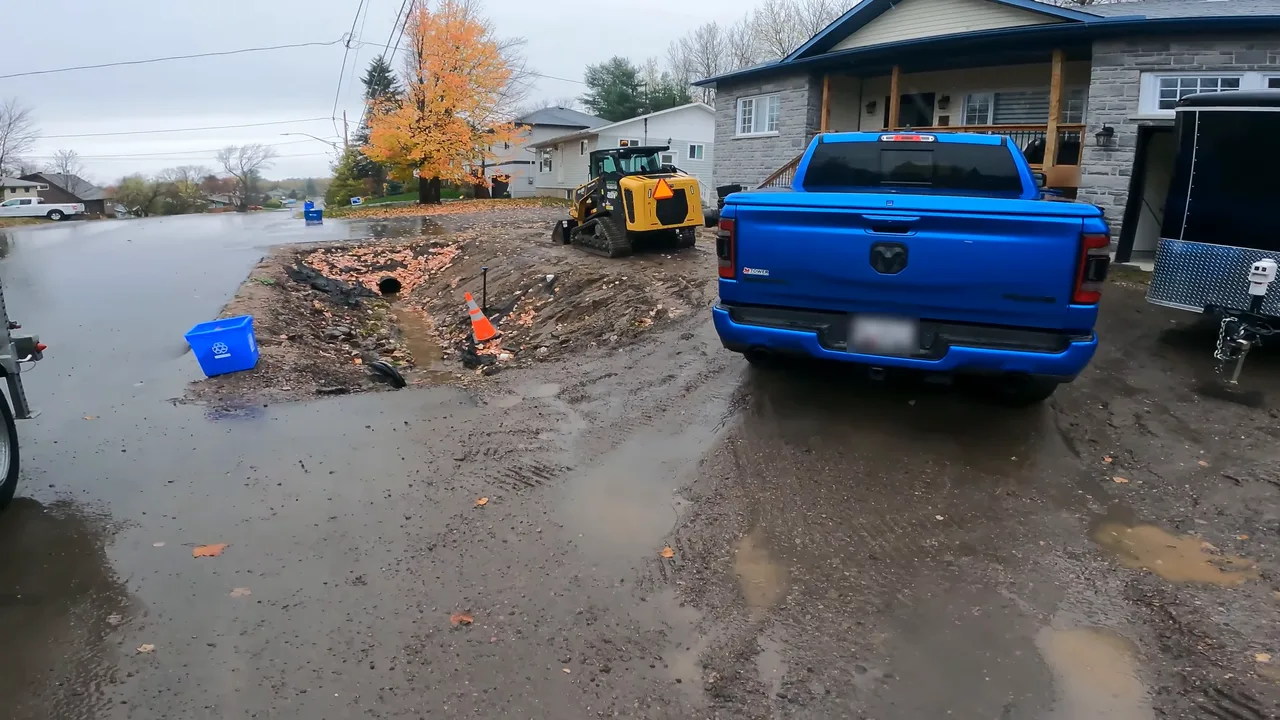
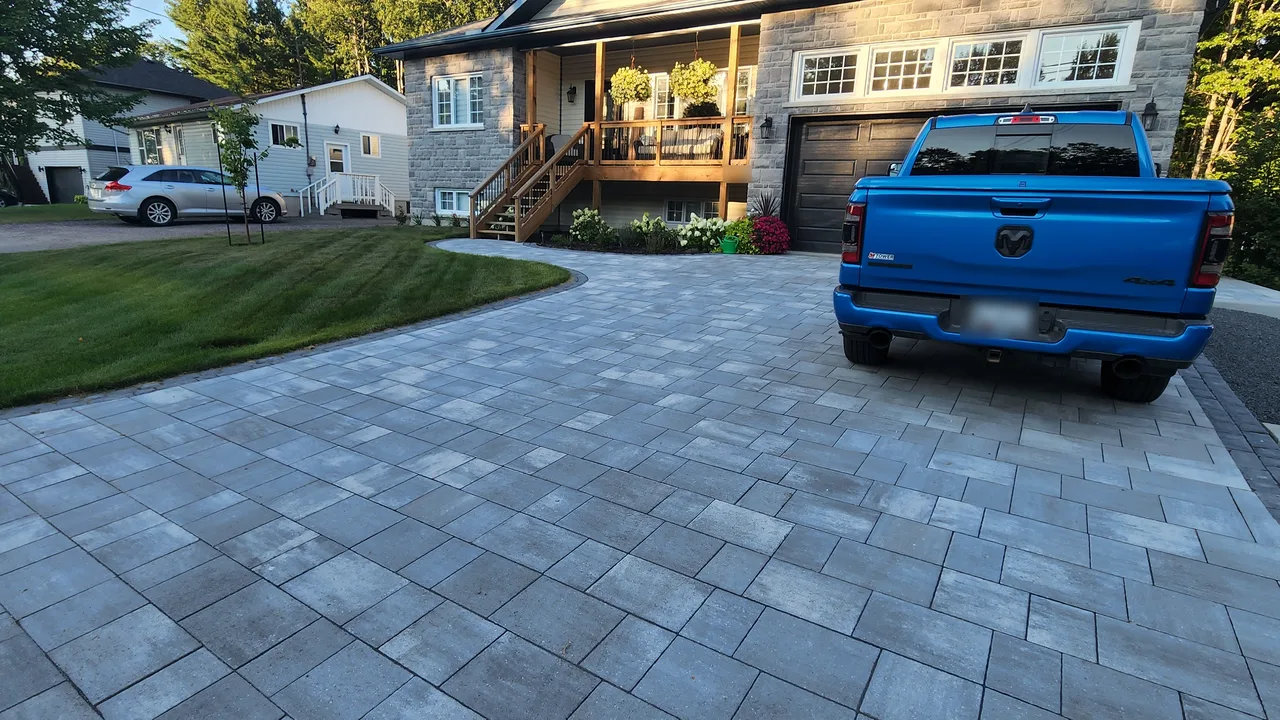
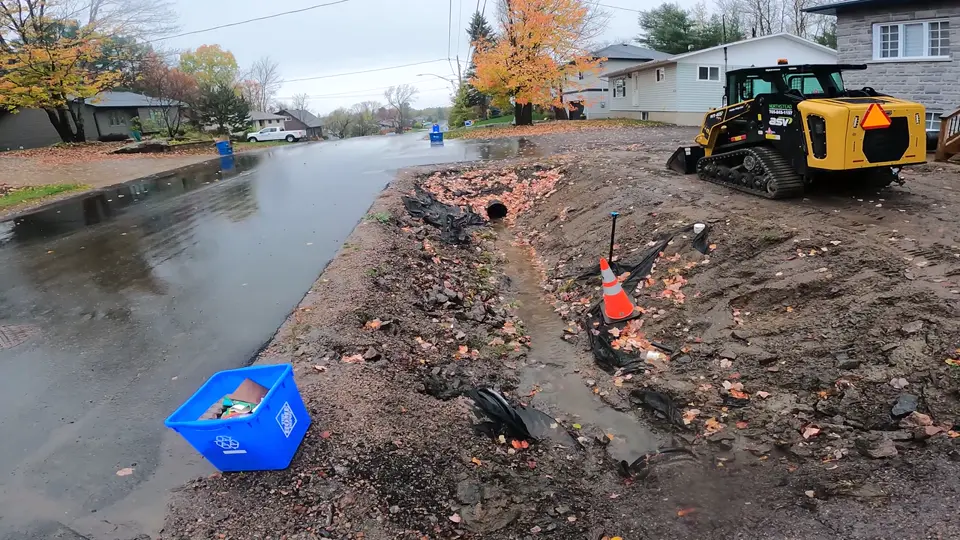
A flooded driveway to a new culvert and catch basin. At this North Bay home, water was pooling across the end of the driveway every time it rained. We took out the old culvert, set a catch basin at the low spot, laid a new culvert and filled the ditch in, and the next summer a new interlock driveway went in over it. Tap through the steps below to see how.
Why it works: water always takes the easiest way. Give it a clear path, sized for the water it carries, and it stops sitting where you don't want it.


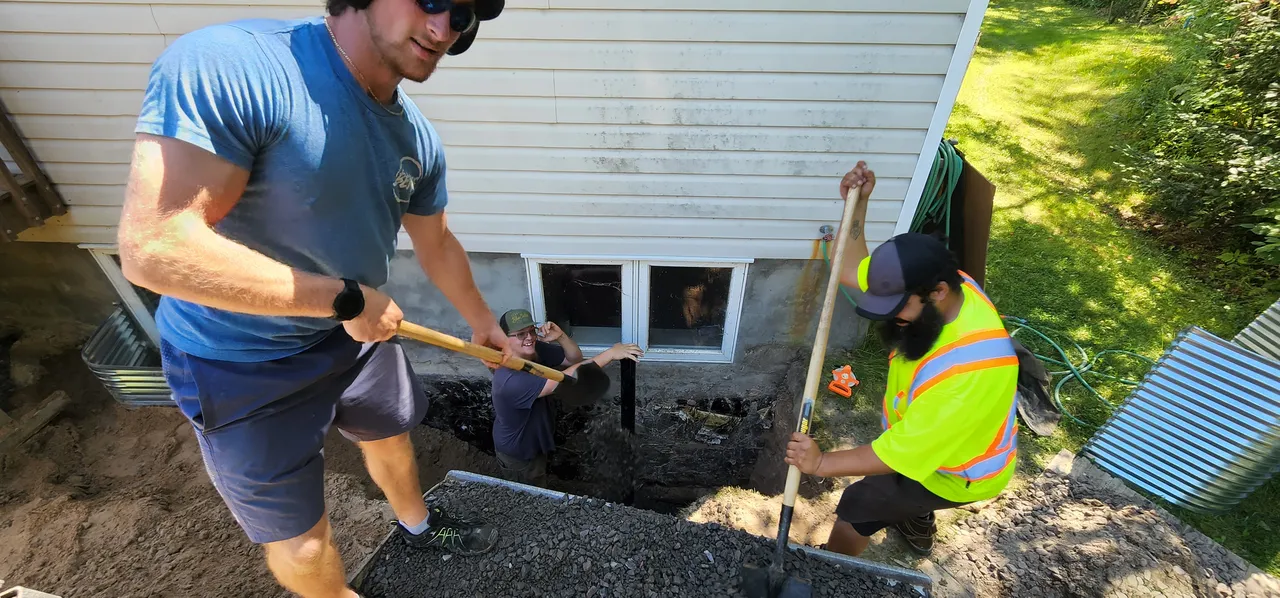
The old window wells were holding water against the basement windows. We dug them out, set new wells and backfilled with clear stone so water drains down and away instead of sitting against the house.
"Super super happy with the job that NorthStead did widening our paved driveway with an interlocking brick section, complete with new retaining wall and paver steps. Darin and the team were really professional and friendly, had great ideas of their own, and also open to suggestions along the way. Fully recommend their quality work!"
"Darin & his crew did an amazing job on my backyard, fence & front yard. Darin kept me updated all along. His staff worked incredibly hard through all kinds of weather conditions to keep on track. They went above & beyond & I could not be happier with the outcome."
"The Northstead crew are first rate. Nothing was rushed and all work was meticulously inspected by Darin. I highly recommend them!"
Water pooling at the end of the driveway, a ditch that backs up after rain, crushed or rusted ends, or a dip forming in the driveway over the pipe. If you're not sure, we'll look at it on site.
Often, yes. Culverts in the road allowance usually have to follow your municipality's rules for size and placement, so it's worth checking with them first. We'll tell you what to ask for.
A trench lined with geotextile fabric and filled with clear stone around a perforated pipe. It collects the water and carries it back into the water table, about 5 feet down, where it doesn't freeze.
No. If water is getting into your basement, it's because the foundation isn't sealed. Grading the ground so water runs away from your foundation can cut down how much water reaches it, but it most likely won't stop it from coming in.
North Bay, Callander, Powassan, Sturgeon Falls and West Nipissing, and East Ferris including Astorville and Corbeil.
Contact us today and we'll find where the water is going and how to fix it.